After swapping my daily driver keyboard recently, I counted how many mechanical keyboards I’ve owned—and it had crept up to ten. That’s been over roughly a decade. Rotating through so many boards, mechanical keyboards turned into something like a hobby for me. I’m writing this chronicle to remember the ones I’ve used along the way.
I first ran into mechanical keyboards at an internet café in Ilsan. I’d wandered in with time to kill; for its day the place was pretty high‑end. Logging into a game, I rested my hands on the keyboard—and the feel under my fingertips was oddly fresh. It wasn’t like any keyboard I’d known; the tactility was different in a good way. I ended up ignoring the game and just typing for a long while. I didn’t know it then, but that board had Cherry MX Blue switches.
Back home I figured out it was probably a “mechanical” keyboard. The prices weren’t trivial, so I didn’t buy one right away—until my once‑a‑year birthday gift window let me get my first mechanical board. That was late 2012.
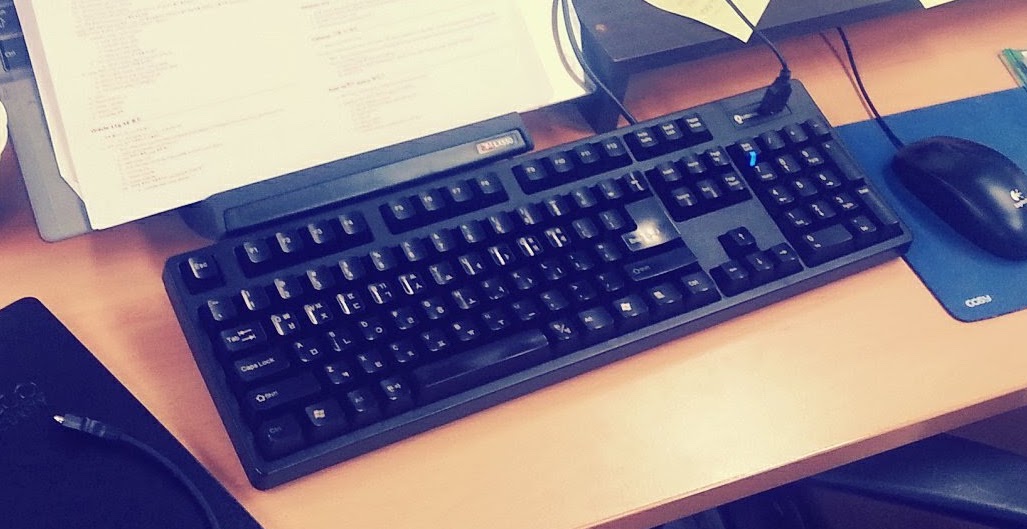
My first mechanical was an iRocks. At the time I didn’t know how many switch types there were—or how different they could feel. I picked Cherry MX Red because guides called it beginner‑friendly. When I opened the box and tried it, I felt a hollow letdown. It wasn’t the crisp, snappy typing I’d felt at the PC bang in Ilsan; at my fingertips it felt dull—almost like my old membrane board. Another board wasn’t in the budget, so I used that one hard anyway.
The next year I used another birthday slot. Having learned how much switches matter, I was careful. I went desk to desk at work, trying coworkers’ boards. In the end I chose Cherry MX Brown—blues were too loud for the office, and I wanted more feedback than reds. The model was a Leopold FC660M.
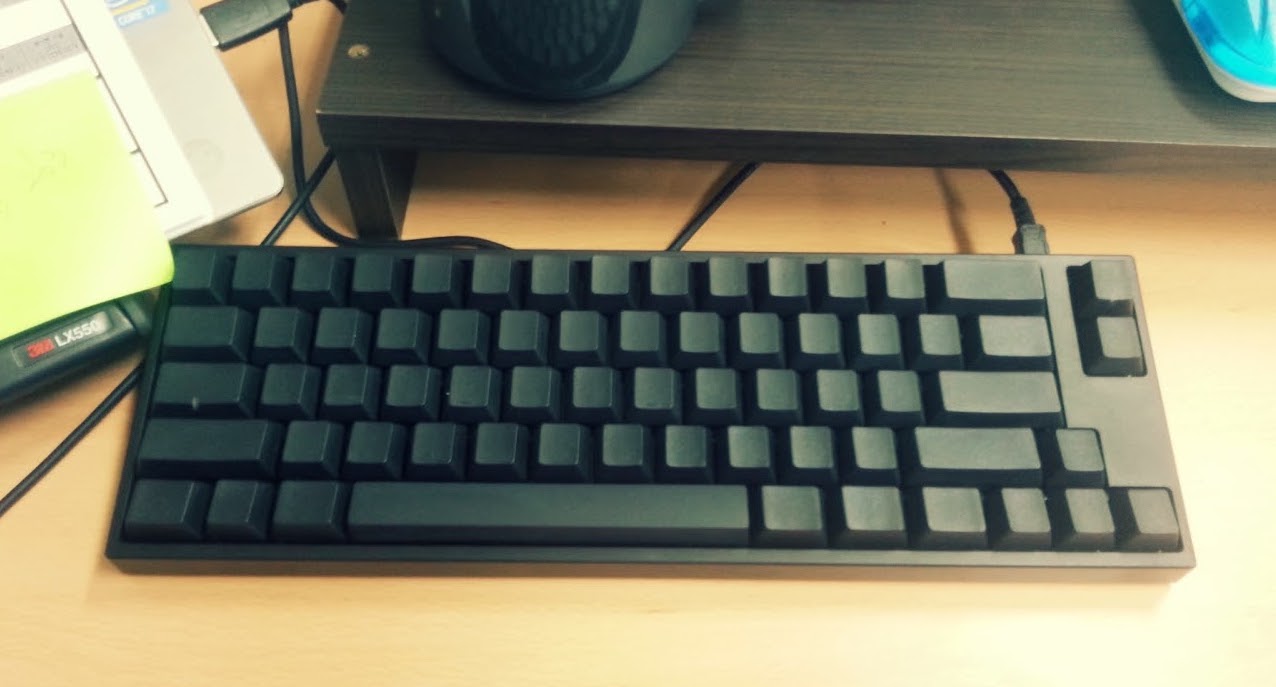
As you can see, it was a 60% layout. My iRocks had been full‑size; I decided a shorter reach to the mouse beat full‑size, and if I was going compact, I’d try something even smaller than tenkeyless—FC660M’s layout.
I loved it. Cherry Browns felt right, the layout worked—but what unexpectedly doubled my joy was the keycap texture. The slightly grainy caps made typing more fun, and this board stayed my main driver for a long while.
Even while I was happy with FC660M Brown, I wondered what other boards felt like. I bought another FC660M—this time Cherry MX Blue—to recapture what that nameless Ilsan café keyboard had shown me. I was still happy with the layout, so I didn’t see a reason to switch models. That was my third board.
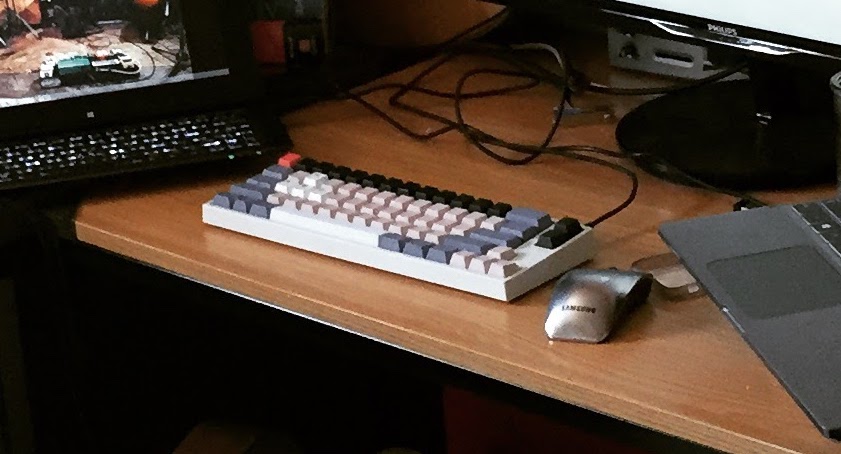
Around then I started enjoying customizing boards. I wanted colorful accent caps but they were hard to find. The white blank caps on my blue FC660M were a good canvas—I even bought dye from a stationery shop and tried dyeing caps at home.
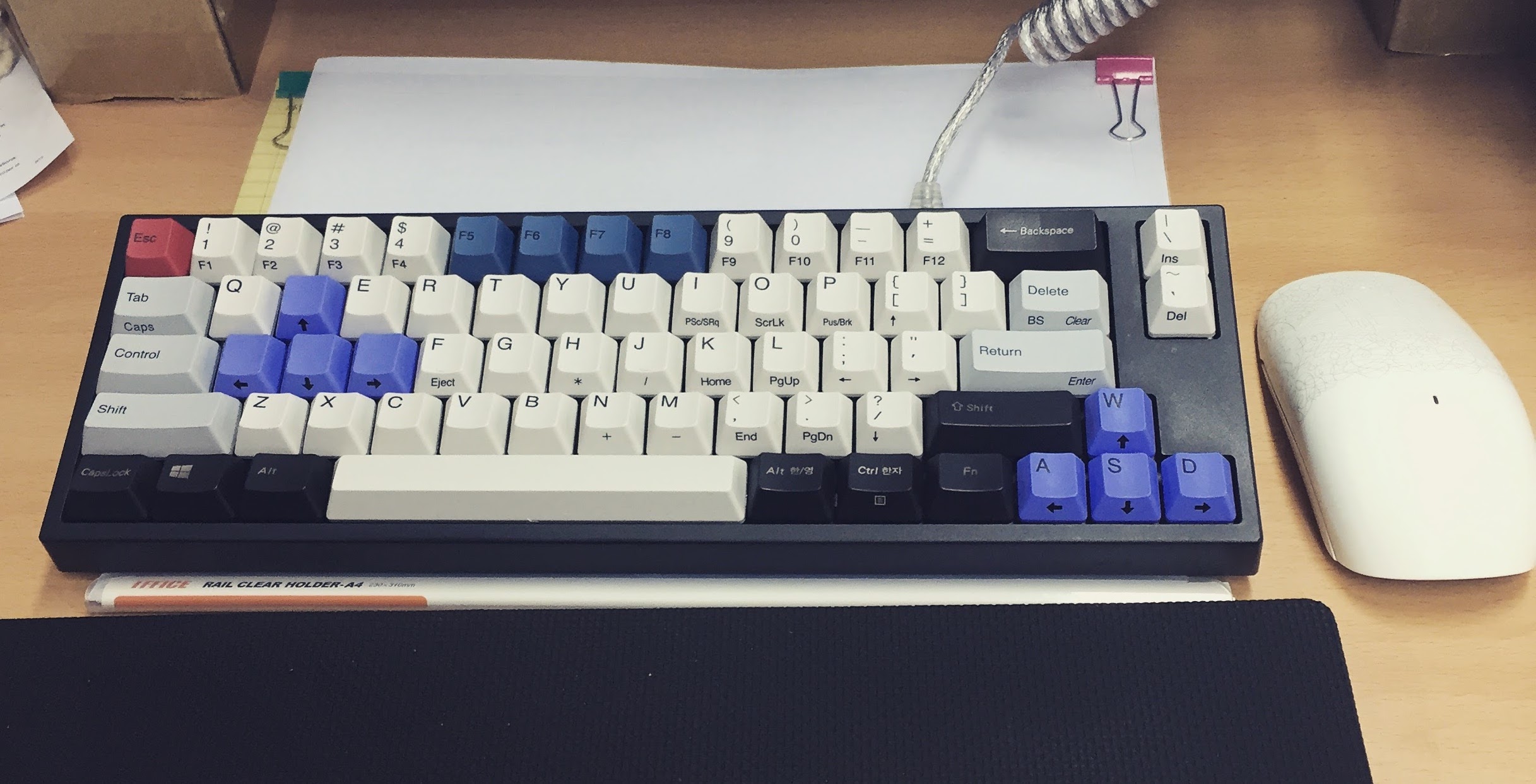
Several coworkers used mechanicals; one had a Topre. A team lead’s board made a crisp, satisfying sound when I walked by. Topre and Happy Hacking were the famous capacitive options then, both in the ₩300k–400k range—more than I could justify. Then Leopold released a new capacitive model: FC660C, priced at ₩219,000—over ₩100k cheaper than Topre or HHKB, and the same layout I already loved. Board number four.
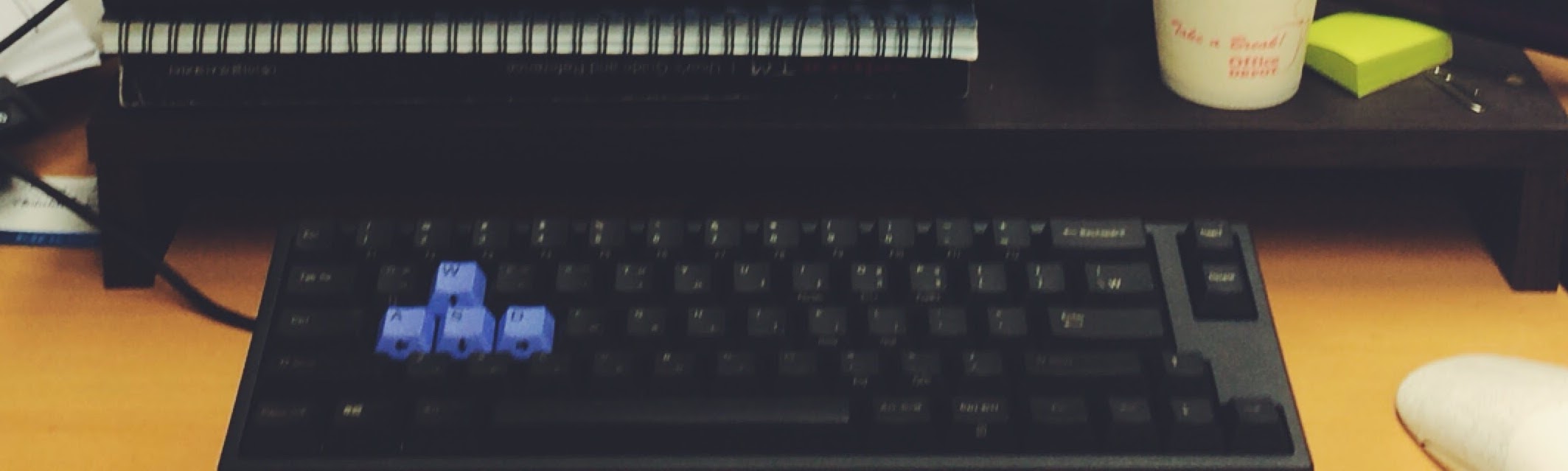
The feel lived up to my hopes, and the layout was already muscle memory, so it quickly became my daily driver. The catch: Topre‑style caps don’t swap with ordinary MX caps, so customizing was harder. Smitten anyway, I opened my wallet for caps—HHKB white sets and Realforce 10th‑anniversary caps, close to another ₩100k just for keycaps. The “Gundam” color combo was worth it.
I spent a lot of time on massdrop.com (now drop.com), which carried tons of keyboards. One day a group buy went up for something called ErgoDox—a split board with an unusual layout that still pulled me in. The hook was the word programmable: you could remap what each key sent. Over $400 stung a little, but after some angst I hit buy with conviction.
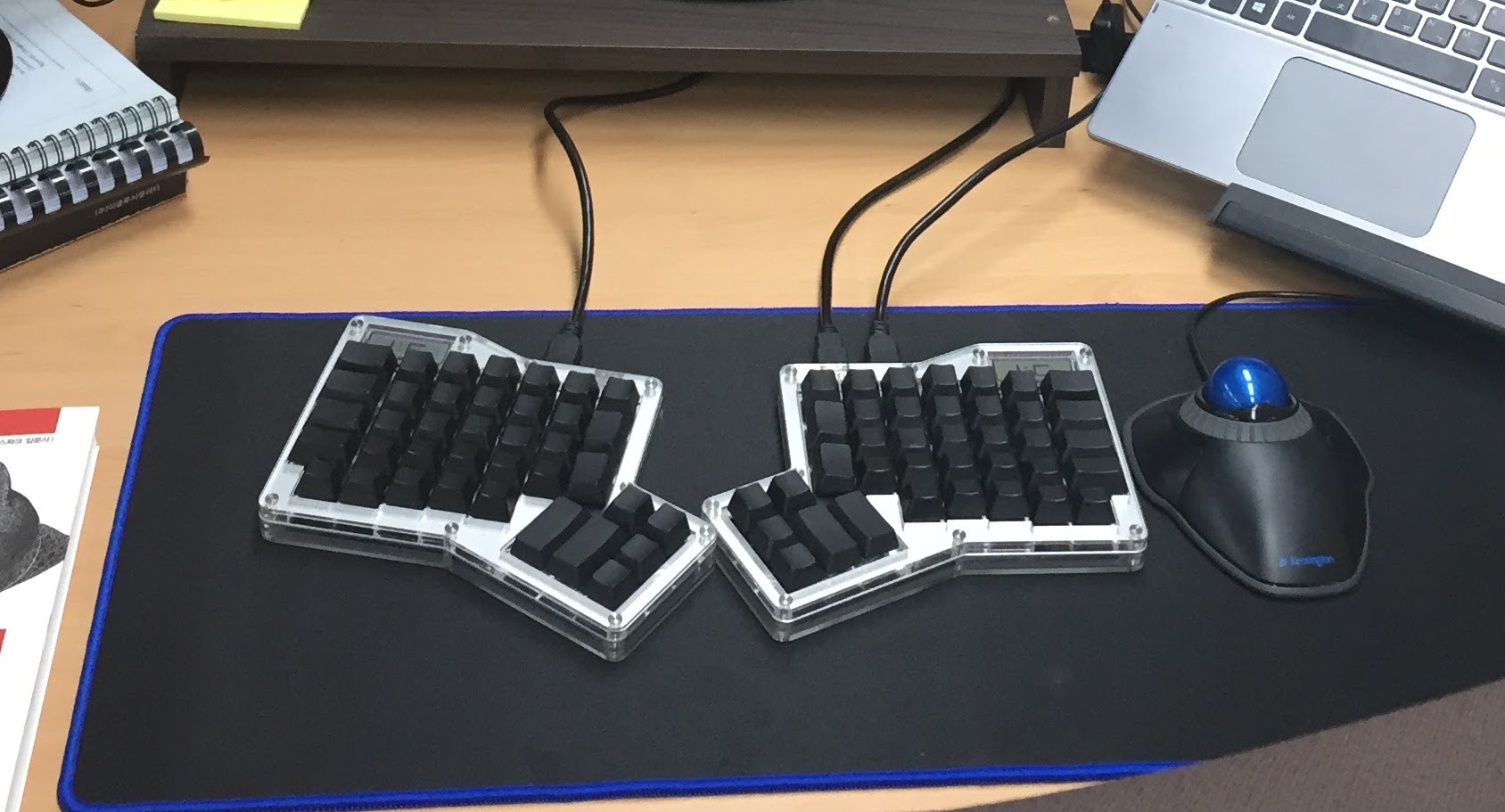
Delivery took forever—it wasn’t off‑the‑shelf stock; they collected orders first, then built. After about six months of waiting, my fifth keyboard, an ErgoDox, arrived in June 2015.
I chose Cherry MX Clear switches. Until then I’d thought red, blue, brown, and black were the whole world—there were far more. I liked browns best among common linears/tactiles but wanted to try something else; clears are tactile like browns but heavier. The tactility was stronger than brown, satisfying overall, but long typing sessions tired my fingers.
Already deep in the hobby, I started hunting the next board. ErgoDox customization had spoiled me; plain boards felt boring, and truly programmable options were scarce. Then I learned about the Planck—tiny even among small boards, a 40% layout, highly customizable through the open‑source QMK firmware. It became my next pick without much debate.
I checked a local used marketplace and lucked into one listing—messaged the seller and picked it up for about ₩100k. My sixth mechanical keyboard.
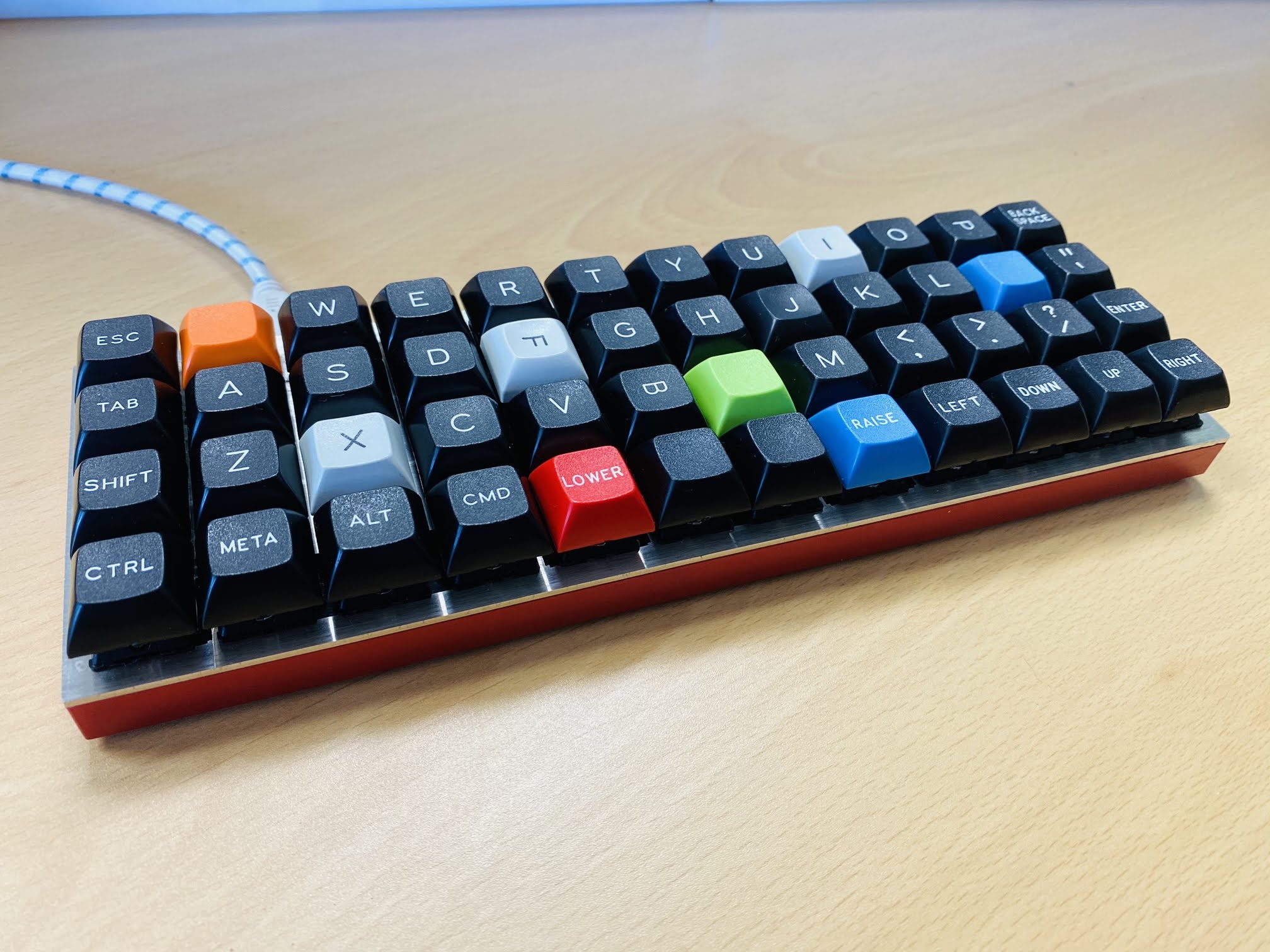
It came with Cherry MX Blue switches—too loud for the office. After debating swaps, I settled on “vintage MX Black”—often praised as a premium switch. I stopped by a hardware store after work for solder and an iron, but I’d never soldered before and failed at desoldering the blues. I paid a shop a modest fee to finish the job.
The Planck’s layout looked wild, but adapting was easier than expected—because I defined the layout myself. After rounds of tweaking, it became a favorite.
I hacked QMK for convenience:
First, I split Korean and English switching into separate keys. The usual Hangul key toggles; you need to know which mode you’re in, so I’d often start typing and then toggle. I tracked state with a boolean and implemented separate “switch to Korean” and “switch to English” keys.
Second, I added “repeat with count” for arrows—like Vim’s 5j. Outside Vim I missed that, so I implemented it in firmware.
Third, I added shortcuts to jump to specific apps—for example, a chord that runs “Cmd+Space → type Chrome → Enter.”
With more small QMK tweaks, my fingers fully adapted to the Planck—coding on anything else started to feel wrong.
While I was happy with the Planck, I still browsed keyboard sites, hoping for something new—but I was too comfortable to leave. Then I noticed Let’s Split: split halves, same 12×4 40% as the Planck, QMK‑programmable. It became my seventh board without much thought.
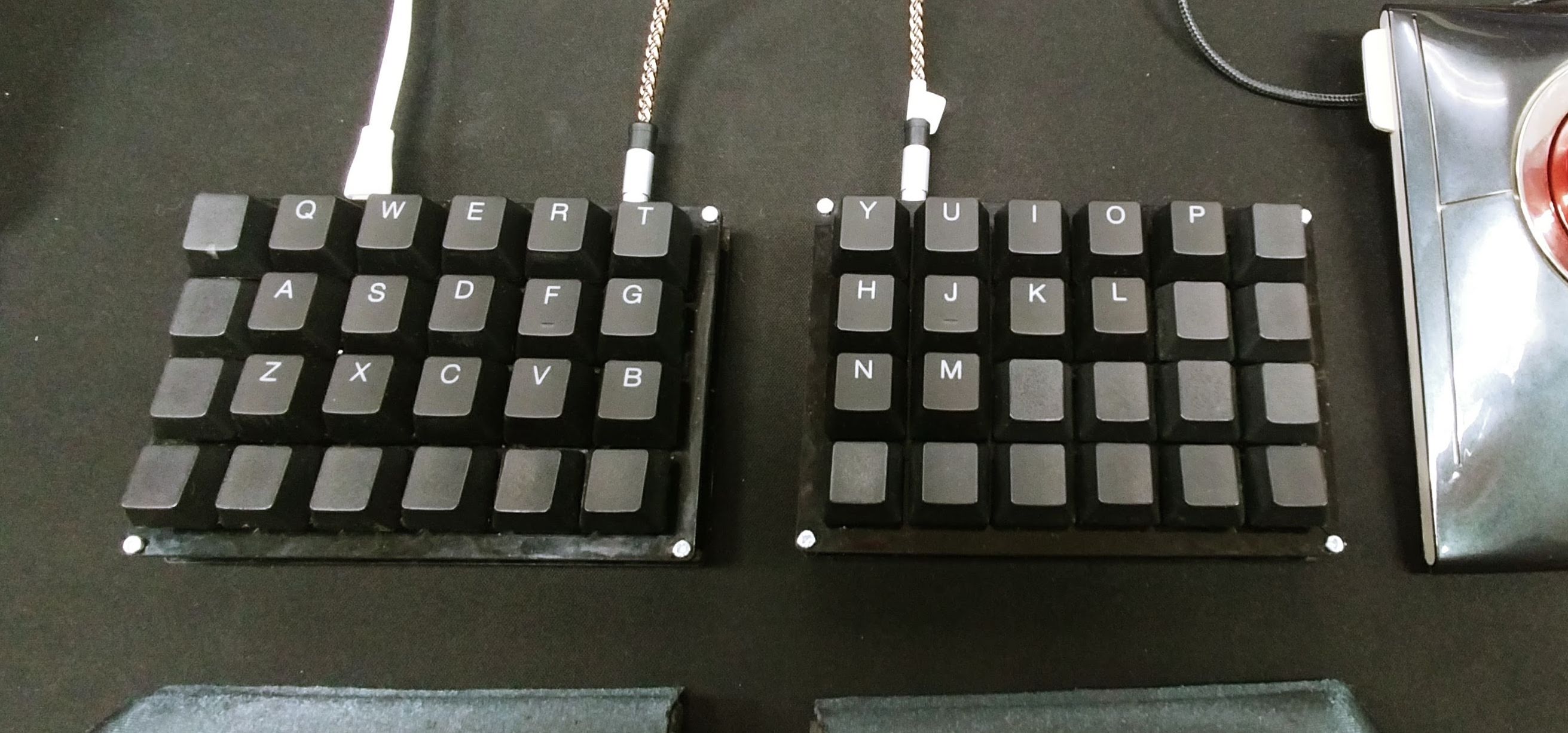
For a while Planck was my office board and Let’s Split lived at home. Even fully satisfied, I kept browsing—and then the same Planck model caught my eye again, but with hot‑swap sockets: switches could be changed without soldering. For someone curious about every switch feel, that was essential. Another used purchase, about ₩100k again. My eighth mechanical keyboard.
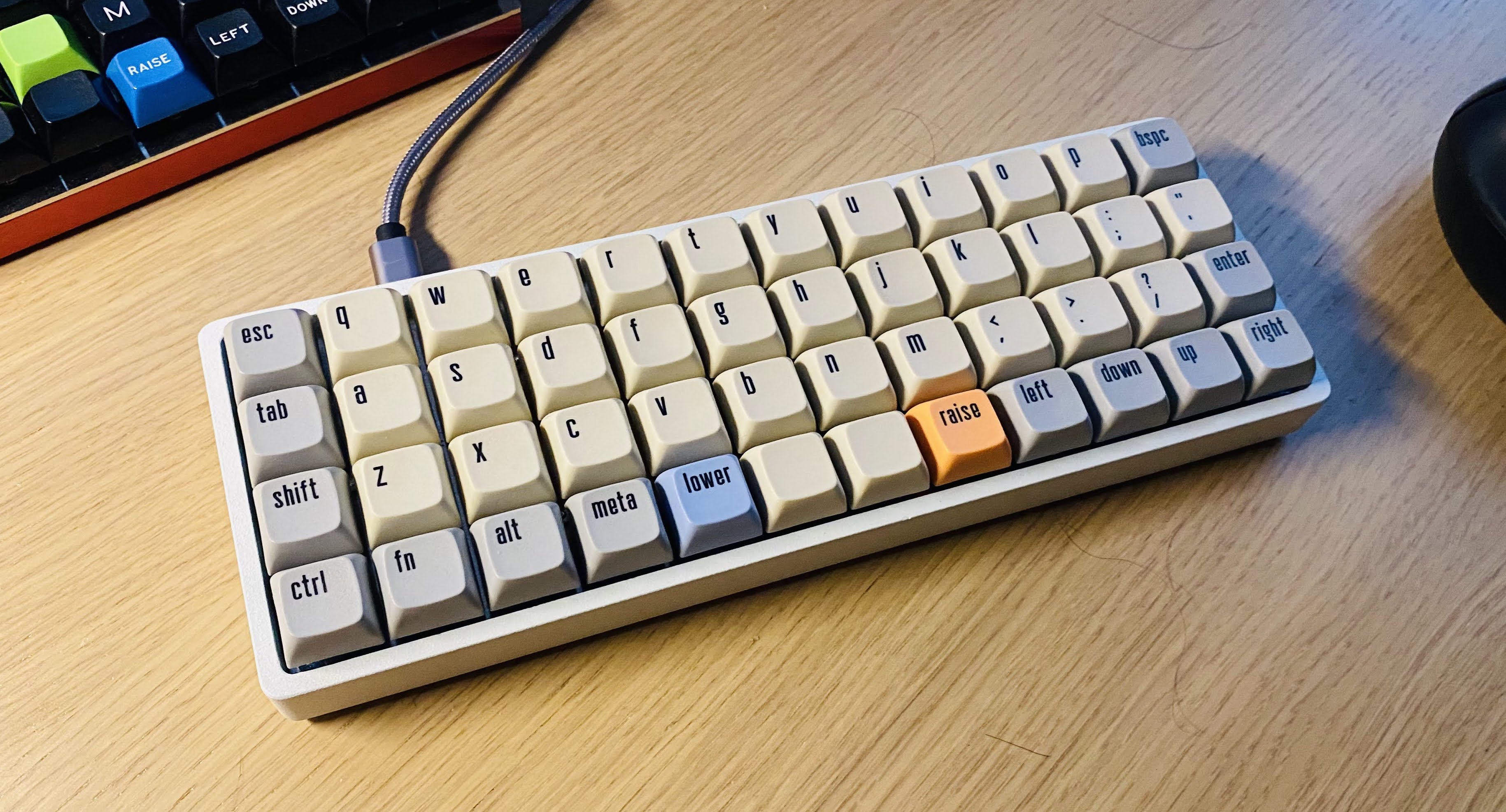
With hot‑swap Planck I’d shop switches when bored. The world held countless switches; swapping them felt like a new keyboard each time, while keeping the layout I knew. The 40% footprint also meant fewer switches to buy than full‑size.
One itch remained: I could try endless MX‑style switches, but none gave that crisp capacitive “thock” of Topre. FC660C had shown me electrostatic capacitive typing, and I missed it—but I wasn’t willing to give up the Planck layout. For a long time I wished for “Planck layout + capacitive.”
Apparently I wasn’t alone—a group buy appeared for a board called Conundrum: Planck‑like layout, QMK support. I hovered the cursor over buy without hesitation.
Like my first Planck, it was a preorder group buy. Ordered March 2021, it didn’t arrive until October 2022—well over a year later. My ninth mechanical keyboard.
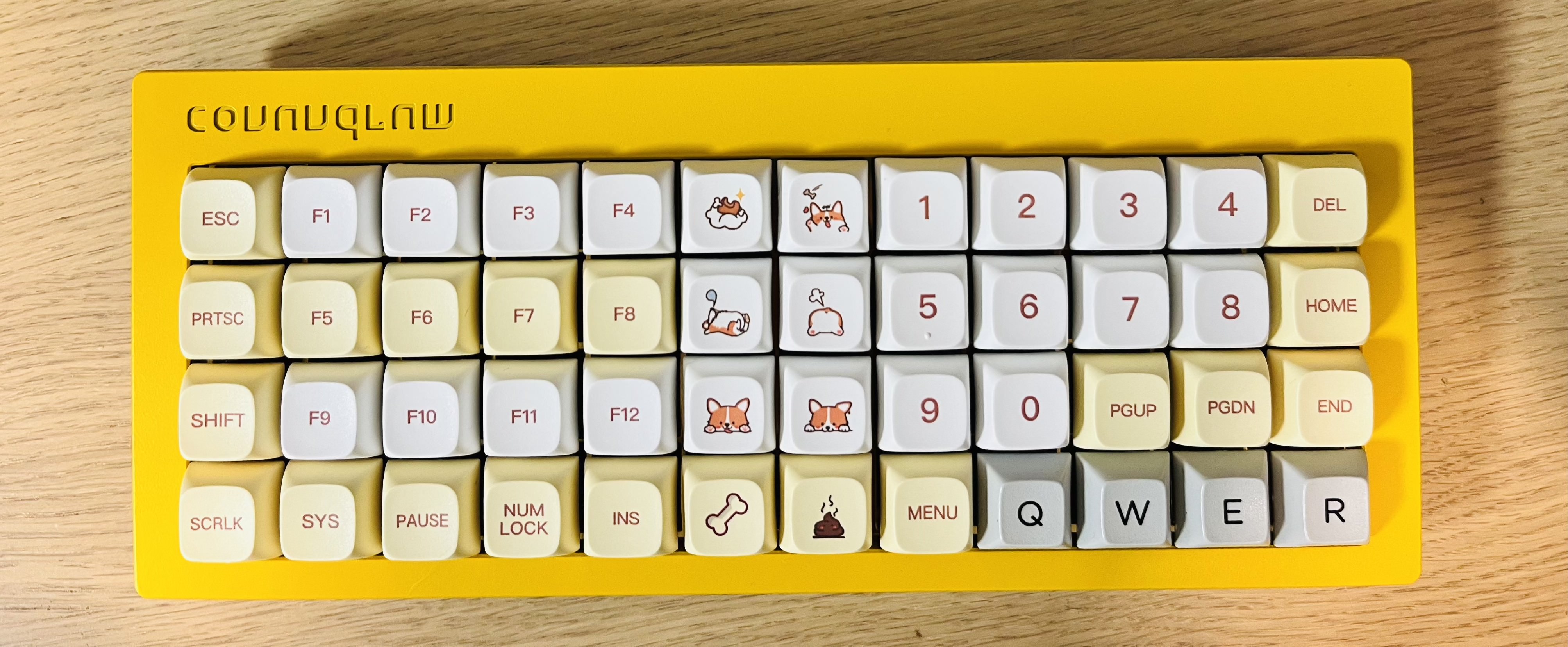
The Conundrum felt great. It wasn’t Topre’s electrostatic mechanism but Noppoo‑style capacitive—so the feel differed slightly. If Topre is sharp and “clicky‑thocky,” Noppoo‑style is softer, more “thock‑bubble.” Not quite Topre, but it finally paired Planck layout with capacitive switches and became my top daily driver.
Then my hot‑swap Planck broke—the Command key died, and swapping switches didn’t help, so it was likely the hot‑swap socket or PCB. Beyond my repair skills, I bought another identical hot‑swap Planck through tears. That’s my tenth board.
Even with a replacement, the broken one nagged at me. Searching for fixes, I found rewiring an unused key to the dead Command pad and remapping in firmware. I tried it—no spare wire, so I bodged it with solder wick—and it worked. The dead Planck lived again.
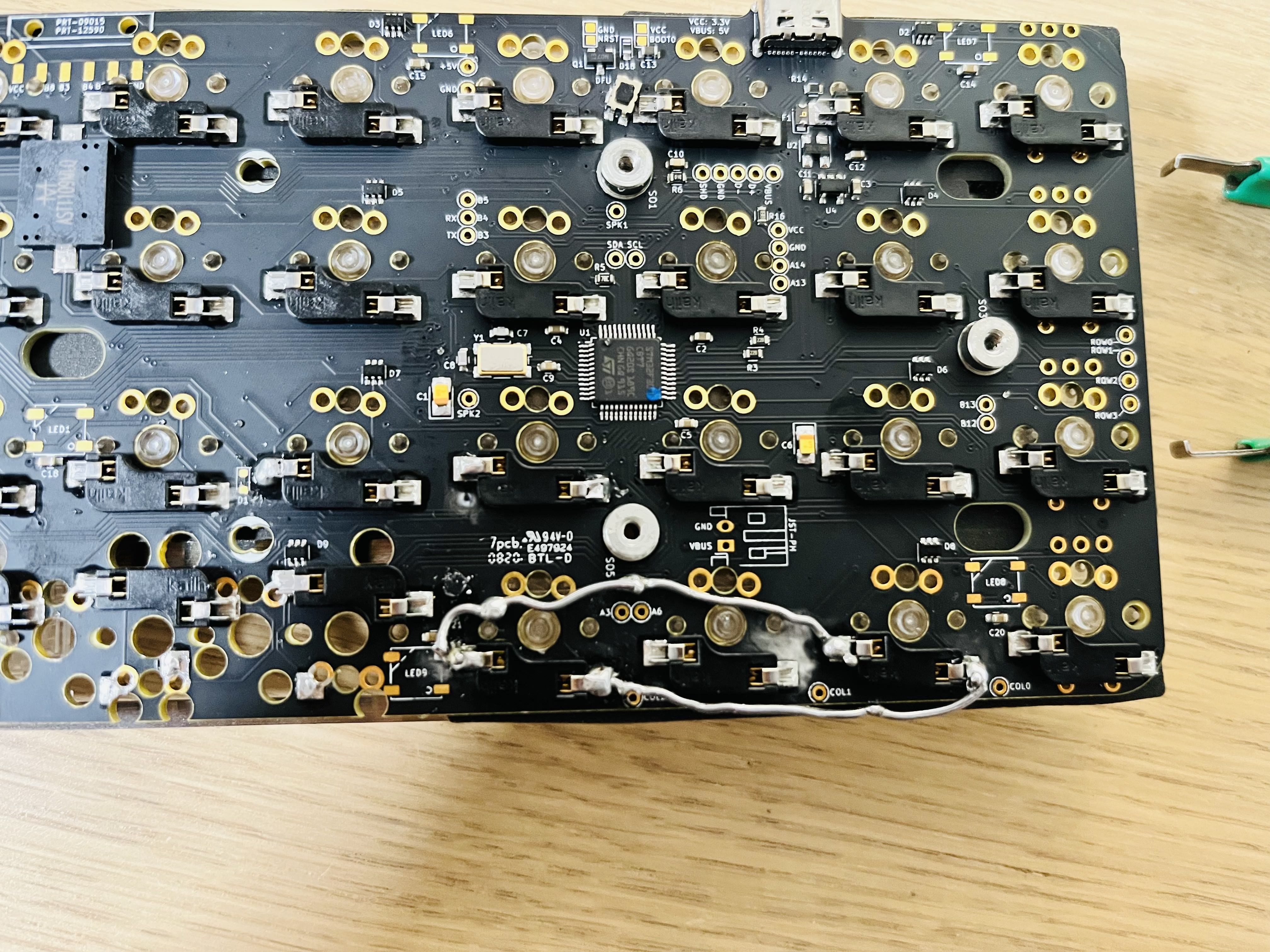
Today I rotate two Plancks and one Conundrum as mains—different switches on each Planck for variety, Conundrum when I want capacitive. I’m drafting this post across all three.
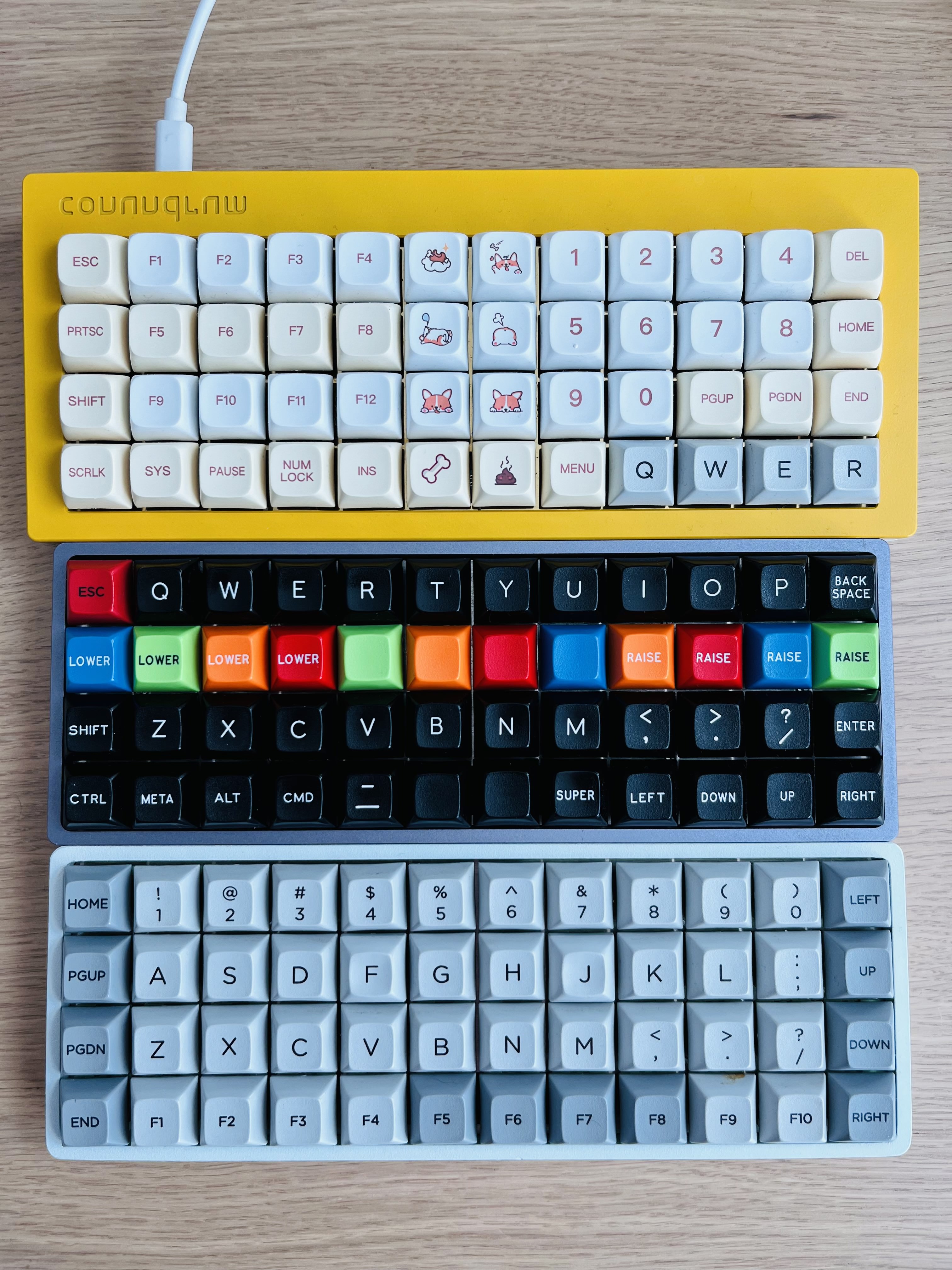
Lately I’m thinking about transplanting hot‑swap sockets into the ErgoDox that’s been deep in a drawer. I’m curious about buckling spring, like the discontinued IBM Model M. A chance keyboard at an Ilsan PC bang a decade ago pulled me into mechanicals—realizing typing itself could be fun added a good hobby to my life.